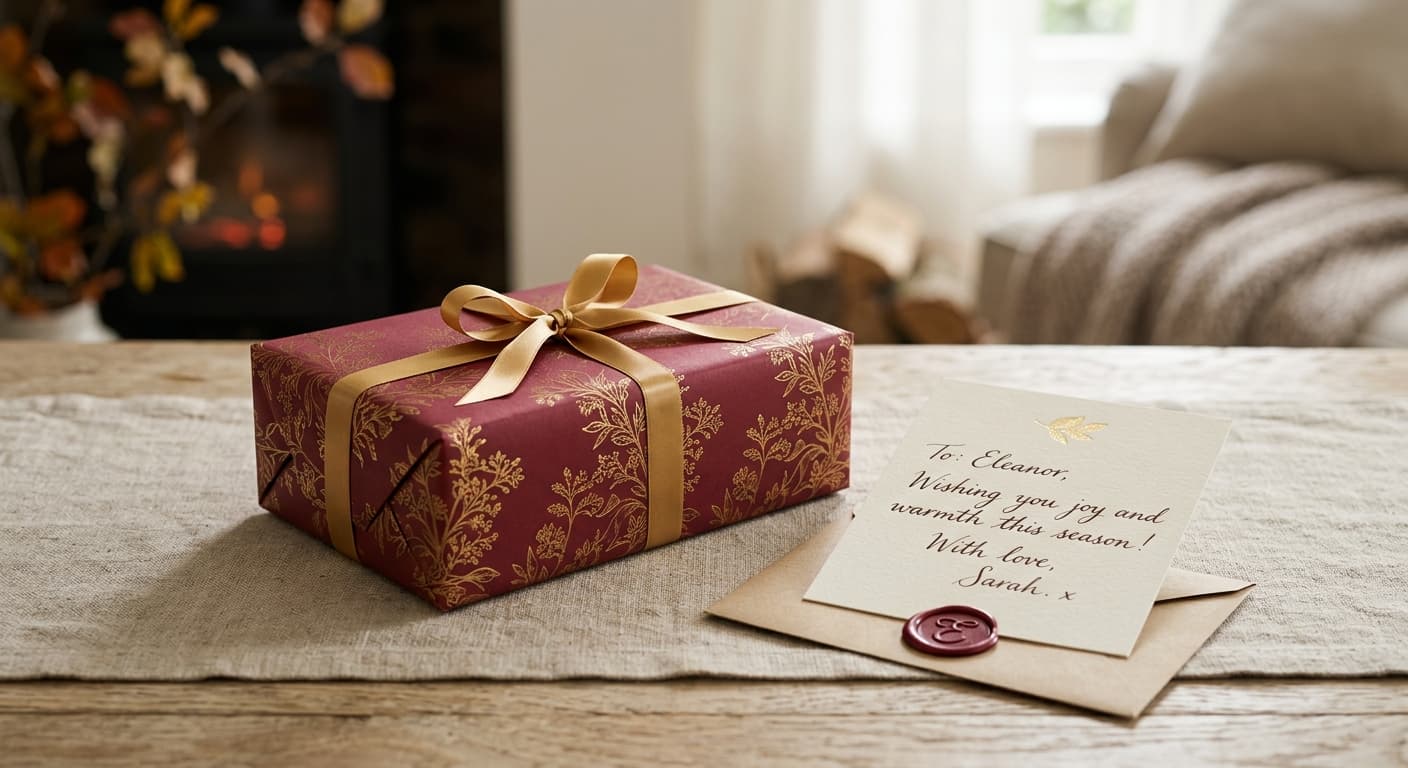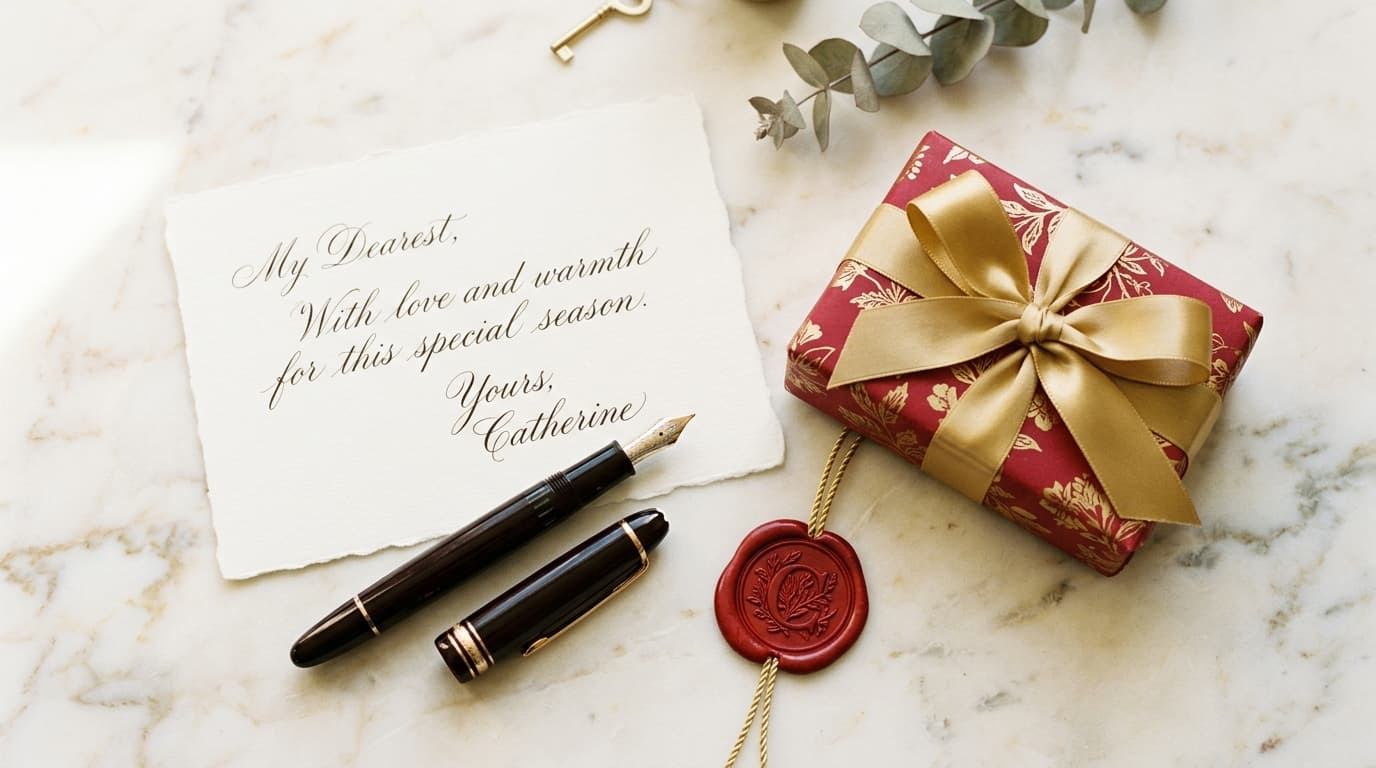
There is a particular silence that follows the opening of an envelope. Not the pause before a reply, but the quieter kind — the moment when someone realises that another person sat down, chose their words, and wrote them out by hand. That pause is the gift before the gift.
We live in an age of instant messages, read receipts, and emoji reactions. None of these are bad. But none of them carry the weight of ink on paper, of a sentence crossed out and rewritten, of a stamp chosen and a letter posted. A handwritten note says: I gave this time I cannot get back.
At Celebrate, every gift can include a card. Most of our clients take us up on it. But many hesitate at the same point: what to write. The anxiety is almost always the same — a fear of not being eloquent enough, of saying too little or too much. So here is what we have learned, after composing thousands of notes alongside our clients.
First: short is almost always better. Three sentences can carry more meaning than three paragraphs. A note is not a letter. It is a moment — a hand on someone's shoulder, translated into ink. Write what you would say if you had ten seconds and nothing to hide behind.
Second: be specific. "Thinking of you" is kind. "I still think about that afternoon in Gisenyi" is something else entirely. The reader should feel seen, not addressed. Specificity is what separates a note from a greeting card.
Third: don't try to be poetic. The most moving notes we have seen were plain, direct, and honest. "I'm proud of you." "You were right, and I should have said so sooner." "This made me think of your mother." These are the sentences people keep in desk drawers for decades.
Finally: sign your name. Not your initials, not a dash. Your full name, written with care. It is the last thing the reader sees, and it should feel like an arrival — like you are, for a moment, in the room.
A good note does not need to be long, or clever, or beautifully written. It only needs to be true. If you can manage that, the paper will do the rest.