
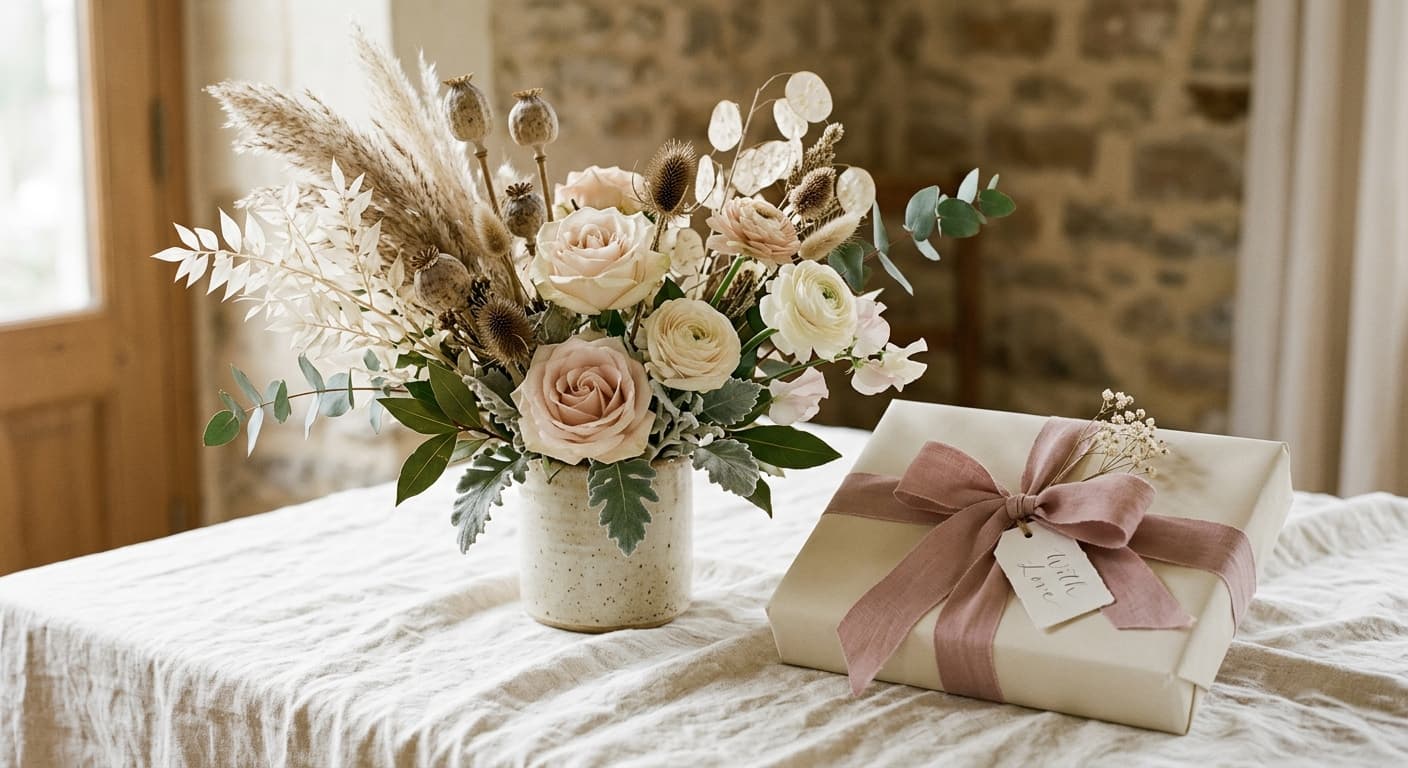
In the Victorian era, flowers were a code. A red rose meant passion, a yellow one jealousy, a white lily restored innocence. Entire conversations could be conducted through a carefully chosen bouquet, and books cataloguing these meanings sold in enormous numbers. The language of flowers — floriography — was one of the few ways to say what polite society would not allow you to speak aloud.
We no longer live under those constraints. Yet flowers still say things that words find clumsy. A bunch of wildflowers left on a kitchen table says: I noticed you were tired. A single peony in a bud vase says: I think you're beautiful, and I'm not going to make a production of it. The vocabulary has changed, but the grammar remains.
What has changed is the context. The Victorians had rules; we have instincts. A modern bouquet doesn't need to follow a chart. It needs to match a feeling. This is both liberating and harder — because it means you have to think about what you're actually trying to say, rather than looking it up.
Here is what we've learned from years of composing gifts that include flowers. A single variety, simply arranged, always outperforms a mixed bouquet. A handful of garden roses in a jar says more than a florist's showpiece. This is not about cost — it's about clarity. One flower, chosen well, carries a single message. A dozen varieties carry noise.
Colour matters more than species. Most people cannot name the flower, but they will remember the colour. White reads as calm, respect, new beginnings. Blush reads as tenderness. Deep red reads as intensity — use it sparingly. Green and foliage-heavy arrangements read as thoughtful, grounded, slightly unconventional. Yellow is honest, cheerful, uncomplicated.
And the vessel matters as much as the stem. A supermarket bouquet in a beautiful vase looks considered. An expensive arrangement in cellophane looks hasty. If you are sending flowers, send them in something the recipient will keep. The vase stays on the shelf long after the petals fall.