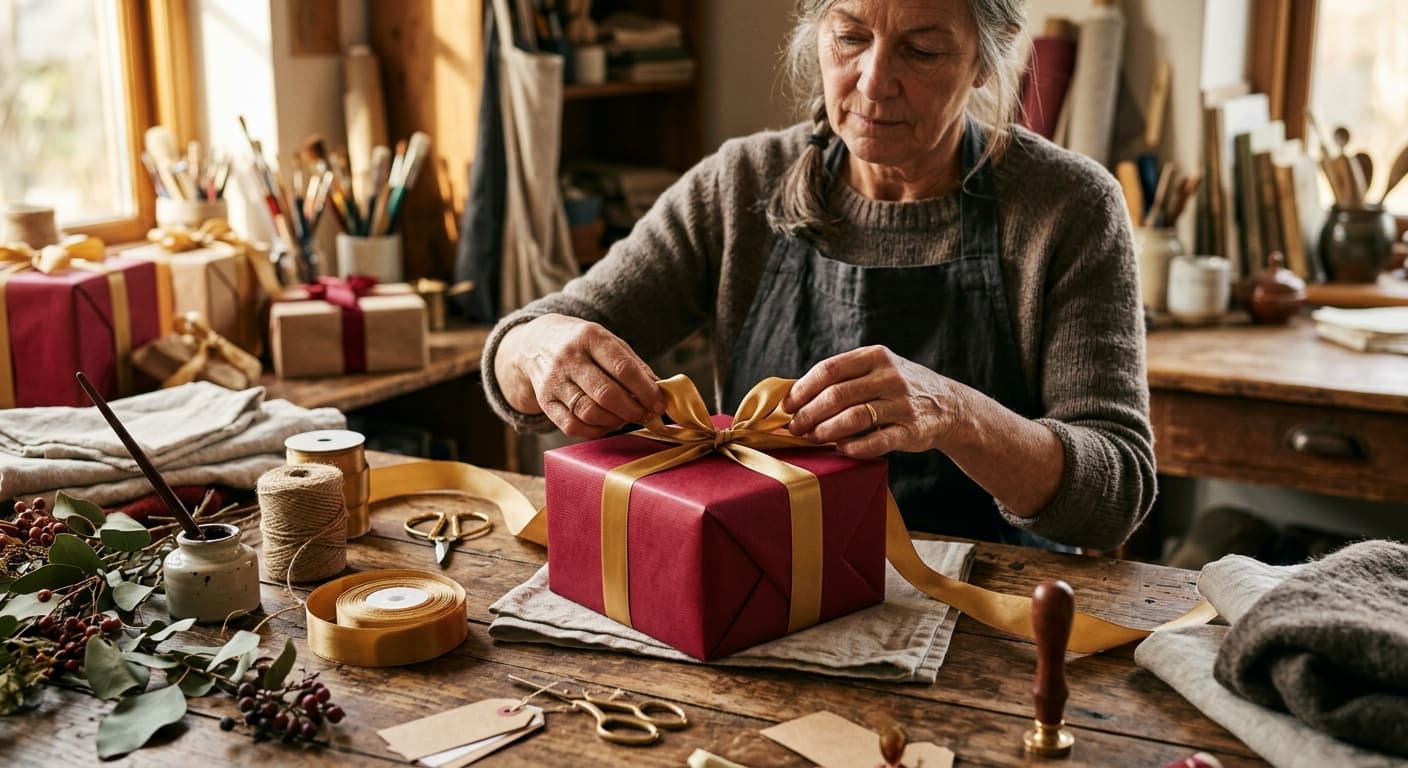
Ribbon is the final gesture. It's the part of the wrapping that people touch first when they begin to open a gift, and the part they remember longest. Choosing the right ribbon is not about decoration. It's about setting a tone before a single word is spoken.
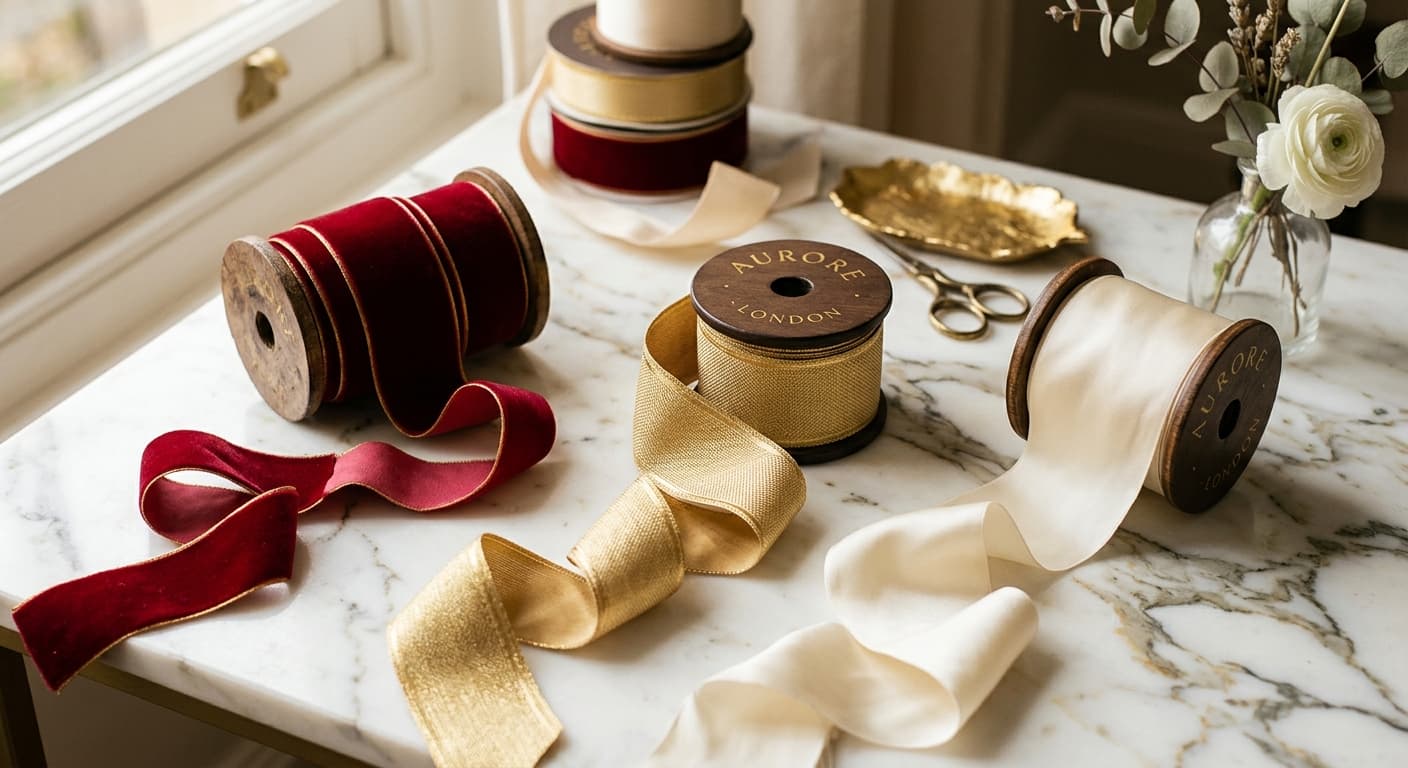
Grosgrain is our workhorse. Its fine ridges give it a matte, textured surface that photographs beautifully and holds a crisp knot. It signals tradition without being fussy. We use it for most corporate orders and for gifts where elegance and restraint are the brief. If you're uncertain, grosgrain in a neutral tone is almost never wrong.
Silk is for occasions that ask for softness. A condolence gift, a new mother, a quiet anniversary. Silk ribbon doesn't hold structure the way grosgrain does — it drapes, it pools, it catches light in a way that feels gentle rather than precise. We never tie silk in a bow. A simple knot with trailing ends is more honest to the material.
Velvet carries the most visual weight. It reads as warm, rich, and intentional. We reach for it in autumn and winter, for gifts that are meant to feel like an embrace. Velvet ribbon in a deep burgundy or forest green can elevate even a modest composition into something that feels considered. But it bruises easily — once you press a fold into velvet, the mark stays. Handle it once. Handle it right.
There are others we keep on hand: satin for its lustre, cotton twill for a rustic or playful tone, linen for summer and when the palette is very light. Each has its moment. But the principle is always the same: the ribbon should feel like it belongs to the gift, not to the wrapper's ego. When it's right, the recipient doesn't notice the ribbon. They notice the feeling.